
Designing the Holocaust Memorial Garden Gate
The design for the Holocaust Memorial Garden gate began as a collection of sketches, an exploration of symbolism, form, materiality, and emotional response.
From the outset, it was important that the gate carried both physical and psychological presence. It needed to feel solid and grounding, creating a quiet sense of safety and permanence, while also inviting people gently into the garden itself.
The gate was conceived not simply as an entrance, but as a threshold, a transitional moment between the outside world and a space created for reflection, remembrance, and contemplation. We wanted visitors to pause before entering, to feel a subtle shift in atmosphere, and to consider what lay beyond the gate before stepping through it.
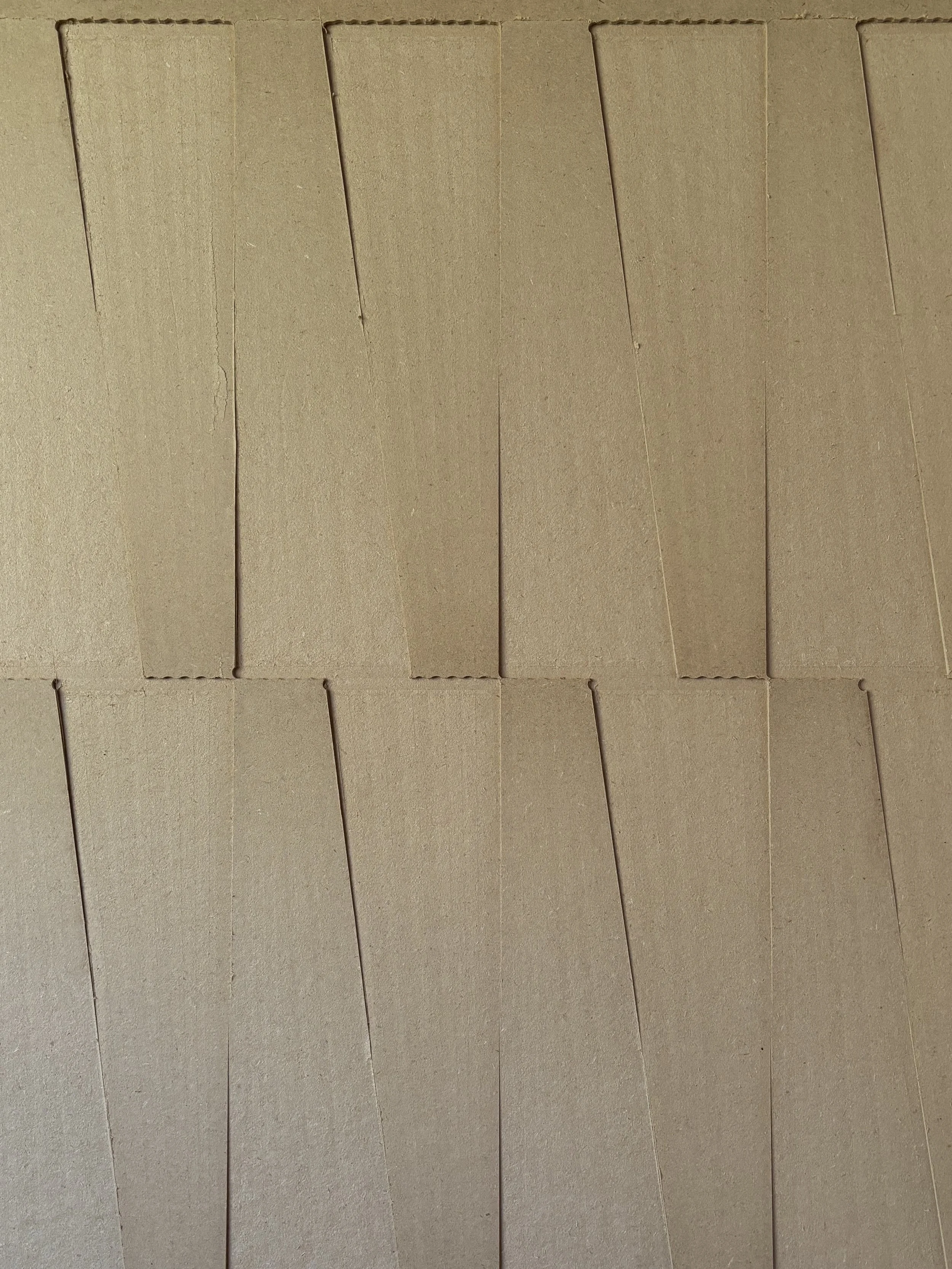
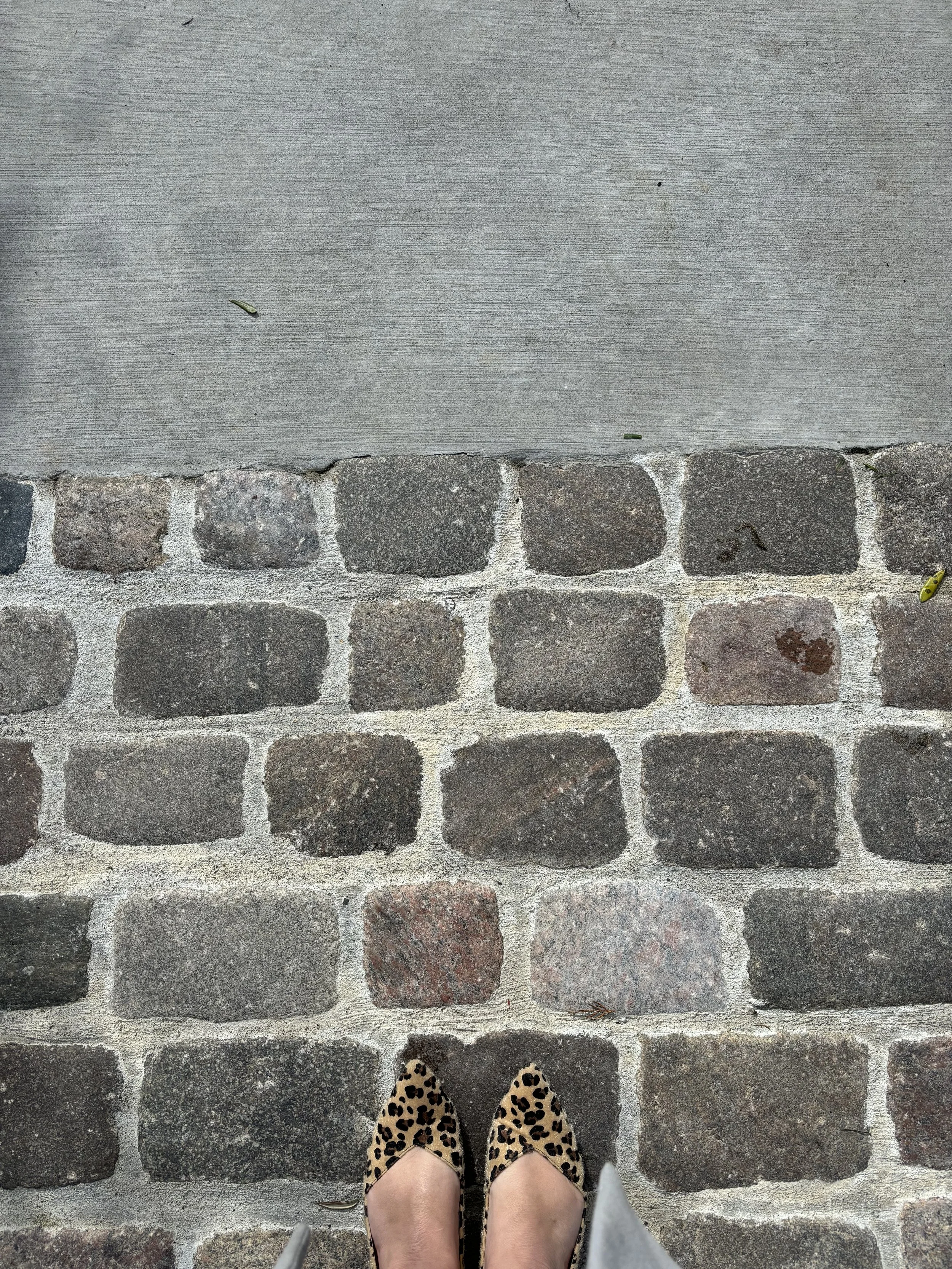
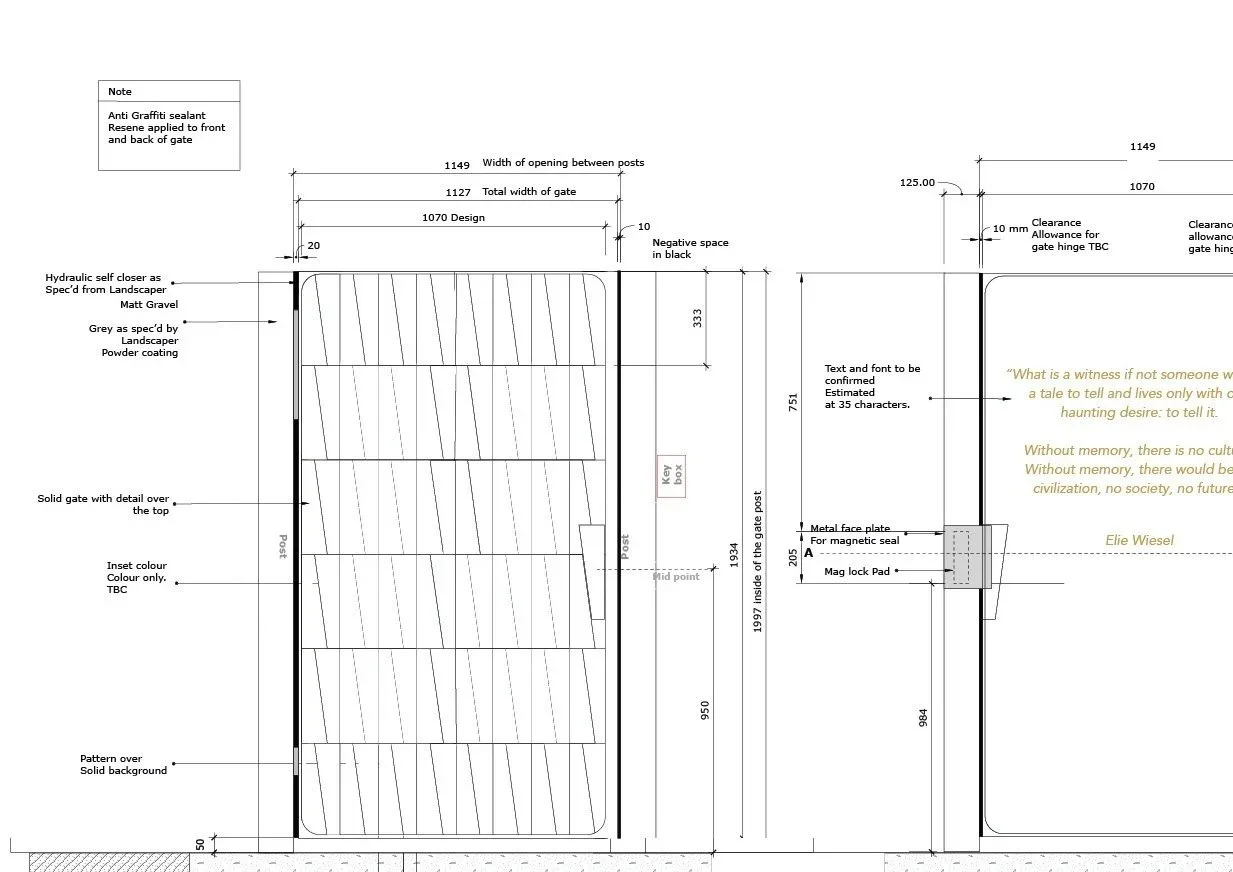
Design often carries storytelling within it, even when expressed quietly. Every decision surrounding the gate sought to hold meaning through form, proportion, texture, and material. While visually light in parts, the gate itself carries considerable weight, intentionally reflecting the gravity of the memorial and the immense weight of collective grief and loss.
Inscribed onto the rear of the gate are words by Holocaust survivor and writer Elie Wiesel, laser-etched directly into the metal so they remain with visitors as they leave the garden:
“What is a witness if not someone who has a tale to tell…”
“Without memory, there is no culture. Without memory, there would be no civilisation, no society, no future.”
These words were intentionally positioned to linger in the mind after leaving the memorial, reinforcing the importance of remembrance and collective memory.
The design process itself evolved through many stages. Initial concepts were developed through hand sketches before moving into timber prototypes, allowing proportions, scale, and detailing to be refined physically through making. From there, the gate progressed into aluminium fabrication and precision laser etching.
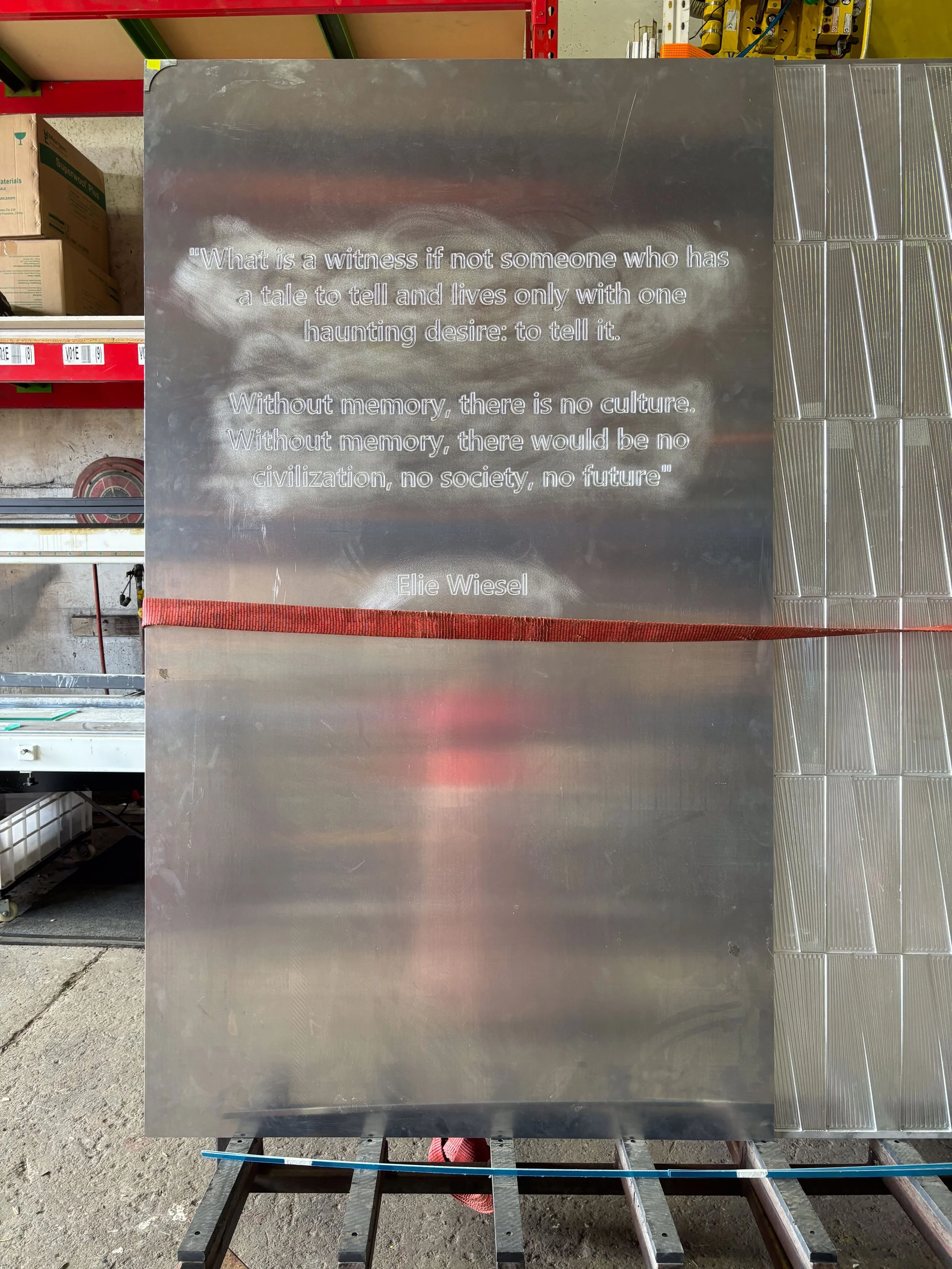
The process took considerable time and collaboration. Because aspects of the design extended beyond standard fabrication methods, there were significant technical challenges that required experimentation, adaptation, and problem-solving across multiple stages of production. Bringing the gate to life ultimately became a deeply collaborative process involving the combined knowledge and craftsmanship of many skilled people.
Each surface was hand-finished, buffed, and polished before powder coating and the final application of the six golden trapezoids, symbolic forms representing the six million Jewish lives lost during the Holocaust. These moments of gold were conceived as quiet points of light within the structure, acknowledging loss, memory, and enduring human presence.
Today, the gate stands not only as an architectural entrance, but as part of a larger act of remembrance, a space intended to encourage reflection, empathy, education, and human connection across generations.